Interior Design Course After 12th in Delhi: Your Complete Guide
Finishing your 12th-grade exams often feels like standing at a massive, bustling intersection with countless roads branching out. For many students and their parents, this time is filled with excitement, questions, and a fair bit of confusion. If you’ve always been drawn to creative fields, you might be wondering what comes next. In a dynamic city like Delhi, where new homes, cafes, and offices are constantly being built, an Interior Design Course After 12th in Delhi has become a promising and popular career path.
This isn’t just about picking out nice furniture; it’s about learning to transform empty spaces into functional, beautiful, and inspiring environments. But where do you start? What kind of course is right for you? This guide is designed to be your friendly mentor, helping you navigate the options and make an informed decision about your future in interior design.
Who Can Pursue an Interior Design Course After 12th?
One of the first questions that pops into a student’s mind is, “Am I eligible?” The good news is that the interior design eligibility after 12th is very inclusive. Your academic stream is not a barrier to entry.
- Arts & Humanities Students: You often have a natural understanding of aesthetics, culture, and human-centric design, which are core components of creating meaningful spaces.
- Commerce Students: Your grasp of numbers, budgeting, and management is a huge advantage. Interior design projects run on strict budgets and timelines, and your skills can help you excel in the business side of the profession.
- Science Students: Your analytical mindset and attention to detail are invaluable. Interior design involves technical drawings, understanding structural limitations, and precise measurements—areas where science students often shine.
While institutes have basic eligibility criteria (usually passing the 12th standard), the most important qualification is your passion. If you are observant, love solving creative problems, and have a keen interest in how spaces affect people, you have the right ingredients for a successful career.
Types of Interior Design Courses Available After 12th in Delhi
Once you’ve decided to pursue this path, you’ll find several types of courses. It’s crucial to understand the difference to choose what fits your goals.
- Degree Courses (B.Des. or B.Sc. in Interior Design): These are typically 3-4 year comprehensive programs offered by universities. They provide a deep, academic understanding of design history, theory, and technical skills. A degree is excellent for those seeking a broad and in-depth educational foundation.
- Diploma Courses: Ranging from one to two years, a diploma is a more focused, industry-oriented program. A good interior designing course after 12th in a diploma format will prioritize practical, job-ready skills, making it a popular choice for students who want to enter the workforce faster.
- Certificate Courses: These are short-term programs (3-6 months) that usually focus on specific skills, such as a particular software like AutoCAD or a niche like Vastu for design. They are great for upskilling but are generally not sufficient as a primary qualification.
The key is to look for a program that emphasizes practical training. Theory is important, but you learn interior design by doing, not just by reading.
Course Duration, Fees & Learning Approach
Understanding the commitment involved is essential for both students and parents.
Duration: As mentioned, certificate courses can be a few months long, diplomas typically last 1-2 years, and degree programs span 3-4 years.
Interior Design Course Fees in Delhi: The cost can vary significantly based on the type of program and the institute’s reputation. Certificate courses are the most affordable, while degree programs at premier universities are at the higher end. Diploma courses usually fall in the mid-range, offering a balance of comprehensive training and affordability. It’s wise to view the fees as an investment in your career and evaluate it against the quality of training, not just the price tag.
Learning Approach: The best institutes adopt a studio-based, hands-on learning model. This means less time in traditional lecture halls and more time in drafting studios, computer labs, and material workshops. This practical approach ensures you are not just learning concepts but are actively creating layouts, building models, and working on mock projects.
Skills Students Learn During an Interior Design Course
A well-structured course equips you with a versatile skill set. You will learn:
- Design Fundamentals: Principles like balance, rhythm, harmony, and proportion.
- Space Planning: How to create functional and efficient layouts for residential and commercial spaces.
- Materials and Finishes: Gaining knowledge about everything from flooring types (marble vs. tiles) to wood varieties, fabrics, paints, and lighting fixtures.
- Software Training: Proficiency in essential industry software like AutoCAD (for technical drawings), SketchUp or 3ds Max (for 3D models), and Coohom
- Site Coordination Basics: Understanding how to read blueprints, communicate with contractors, and oversee basic on-site work.
Career Opportunities After an Interior Design Course
Completing a quality interior design course in Delhi opens up diverse career avenues. You could become a:
- Residential Interior Designer: Specializing in homes, apartments, and farmhouses.
- Commercial Interior Designer: Designing offices, retail stores, cafes, and showrooms.
- Design Assistant: Working in an established architectural or design firm to gain experience.
- Freelancer: Taking on your own projects and building your brand.
- Specialist Designer: Focusing on niches like kitchen design, furniture design, or lighting consultation.
How to Choose the Right Interior Design Institute in Delhi
With so many options, picking the right interior designing institute in Delhi can be overwhelming. Focus on these factors:
- Faculty: Are the teachers practicing professionals or just academicians? Learning from someone who has real-world client and site experience is a game-changer.
- Curriculum: Does the syllabus prioritize practical application? Ask for the ratio of theory to practical classes and the number of site visits included.
- Infrastructure: Visit the campus. Do they have dedicated studios, updated computer labs, and a material library?
- Student Work: Ask to see the portfolios of current students or recent alumni. This is the best proof of the institute’s teaching quality.
How Sukriti Professional Academy Supports Interior Design Students
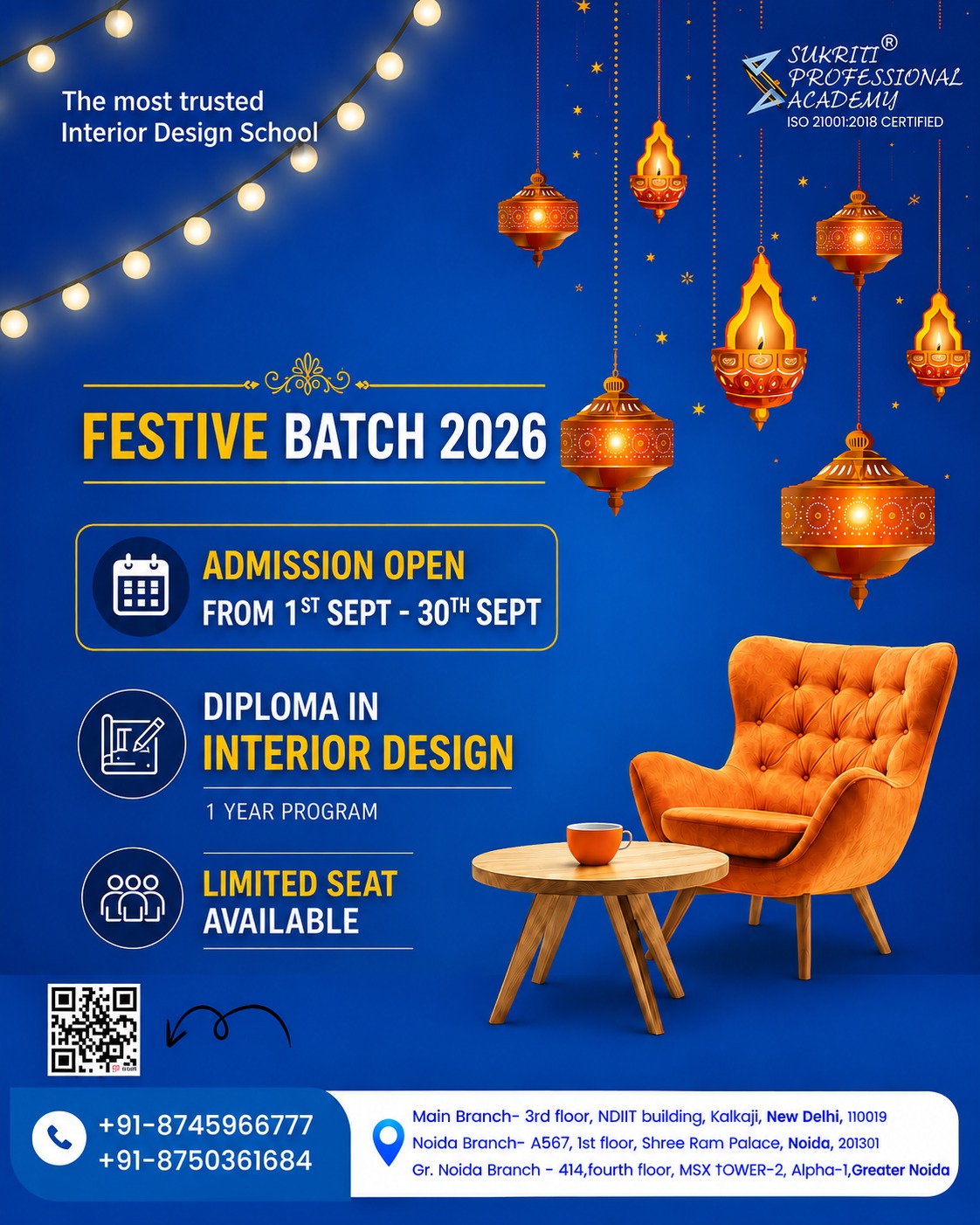
While researching practical-focused institutes, many students come across Sukriti Professional Academy. It stands out because its entire philosophy is built around making students industry-ready. Instead of just focusing on theoretical knowledge, their approach is deeply rooted in hands-on training.
The faculty at Sukriti consists of experienced architects and designers who bring their on-site challenges and successes into the classroom. This mentorship provides students with insights they won’t find in any textbook. Their curriculum integrates regular workshops, material surveys in local Delhi markets, and site visits, ensuring students understand how a design moves from a computer screen to a real-life space. With a student-centric approach and small batch sizes, they ensure every individual gets the personal attention needed to build a strong portfolio and even stronger confidence.
Common Mistakes Students Make After 12th
Be mindful of these common pitfalls during your search:
Choosing a Course Without
- Practical Exposure: An institute that doesn’t take you to a real construction site is not preparing you for a real job.
- Ignoring Portfolio Development: Your portfolio is your ticket to a job. A good institute will make portfolio-building a core part of the curriculum from day one.
- Selecting an Institute Based Only on Fees: The cheapest course may leave you with no employable skills, making it the most expensive mistake in the long run.
Conclusion
Embarking on an Interior Design Course After 12th in Delhi is a fantastic step towards a creative and rewarding career. The city is your canvas, and the opportunities are immense. The key is to make a thoughtful, well-researched decision. Don’t get swayed by flashy ads or grand promises. Instead, focus on the substance—the faculty, the curriculum, and the institute’s commitment to practical learning.
For those serious about building a strong foundation with hands-on training and genuine mentorship, it’s worth exploring what Sukriti Professional Academy has to offer. We encourage you to schedule a counseling session or visit the campus to understand their teaching methods and see if it’s the right fit for your creative journey. Your future as a designer starts with the right first step.