Diploma in Interior Designing: Complete Guide (Eligibility, Fees, Syllabus, Scope)
Quick answer: A diploma in interior designing is a certificate-level course, typically lasting 6 months to 2 years, that teaches design fundamentals, drafting, materials, and software like AutoCAD and SketchUp. Students can enroll after 10th, 12th, or graduation. Fees generally range from ₹50,000 to ₹3,00,000, and graduates can work as junior interior designers, 3D visualisers, or freelancers.
Choosing a career path right after school — or switching careers later — comes down to one question: how fast can you become job-ready? A diploma in interior designing answers that question directly. It’s shorter than a full degree, more affordable, and focused almost entirely on practical, employable skills.
This guide walks through everything you need to know before enrolling: eligibility after 10th, 12th, or graduation, how long the course takes, what it generally costs, the subjects you’ll study, the software you’ll learn, and where the diploma can take your career. You’ll also find a semester-wise syllabus table, a diploma-vs-degree comparison, and answers to the most common questions students and parents ask.
By the end, you’ll know exactly whether a diploma in interior designing fits your goals — and what to look for in an institute before you commit.
What Is a Diploma in Interior Designing?
A diploma in interior designing is a short-term, skill-focused program that trains students to plan, design, and execute interior spaces for homes, offices, retail stores, and hospitality projects. Unlike a full bachelor’s degree, a diploma concentrates on practical, job-ready skills — drawing, materials knowledge, software proficiency, and site execution — rather than extensive theoretical or liberal arts coursework.
The diploma format exists because the interior design industry values demonstrable skill over academic credentials in many entry-level roles. A student who can produce a polished floor plan in AutoCAD and present a coherent mood board often gets hired faster than one with only classroom theory. That’s the core appeal of the diploma in interior designing: it compresses the path from “interested in design” to “employable designer.”
Types of Interior Design Diploma Courses
Not all interior design diploma courses are structured the same way. Understanding the differences helps you pick the right level and format for your situation.
By qualification level:
- Certificate course: The shortest option, usually 3 to 6 months, covering foundational skills like basic drafting and one or two software tools. Best for a quick skill add-on.
- Diploma: The standard option, typically 1 year, covering design fundamentals, materials, software, and a capstone project.
- Advanced diploma: Usually 2 years, going deeper into specialization areas like furniture design, lighting design, or commercial space planning.
- PG diploma (postgraduate diploma): Designed for graduates (often from architecture, fine arts, or unrelated fields) who want a focused, accelerated route into interior design without repeating a full degree.
By format:
- Full-time: Classroom-based, structured schedule, typically includes hands-on studio work and site visits.
- Part-time: Evening or weekend classes, suited to working professionals or students balancing other commitments.
- Online: Flexible, self-paced or live virtual classes, best for students who need geographic flexibility but should confirm whether practical/studio components are included.
Choose full-time if you want maximum hands-on exposure and plan to enter the workforce immediately after graduating. Choose part-time or online if you’re working, studying something else simultaneously, or live far from a quality institute.
Eligibility for Diploma in Interior Designing
Eligibility requirements vary by the level of diploma and the institute, but most programs fall into three entry points.
- Diploma in interior designing after 10th: Many institutes accept students directly after Class 10, typically into a foundation or certificate-level program that can later be upgraded to a full diploma. This path suits students who know early that design is their direction and want a head start.
- After 12th (any stream): This is the most common entry point. Interior design diploma courses generally accept students from any stream — science, commerce, or arts — since the coursework doesn’t require prior knowledge of physics, accounting, or history. A baseline interest in drawing, spatial thinking, and attention to detail matters more than your 12th-grade subjects.
- After graduation: Graduates from any discipline can enroll in a diploma or PG diploma program. This route is common among career-switchers — engineers, commerce graduates, or arts graduates — who want a faster, more affordable route into interior design than starting a second bachelor’s degree.
- Minimum marks: Some institutes set a minimum percentage requirement (commonly around 45–50%) in the qualifying exam. Always confirm the exact cutoff directly with the institute you’re considering, since it varies.
Duration of an Interior Design Diploma Course
Interior design diploma course duration depends on the level you choose:
- Certificate course: 3 to 6 months
- Standard diploma: 1 year (typically split into 2 semesters)
- Advanced/master diploma: 2 years (typically split into 4 semesters)
- PG diploma: 1 year (accelerated, post-graduation entry)
Shorter programs get you into the workforce faster but cover fewer specializations. Longer programs, like a 2-year advanced diploma, build deeper expertise in areas like commercial design, lighting, or furniture — which can translate into stronger starting roles and salary negotiation power.
Diploma in Interior Designing Fees
Interior design diploma course fees in India generally fall between ₹50,000 and ₹3,00,000, depending on the institute’s reputation, location, course duration, and whether software licenses, materials, or study tours are included.
Fees are typically higher for longer, advanced diploma programs and for institutes located in metro cities like Delhi, Mumbai, or Bangalore. When comparing fees across institutes, ask specifically what’s included — software access, drafting tools, site visit costs, and portfolio printing can all be separate add-ons that change the real cost of the course.
For current fee details at Sukriti Professional Academy, reach out directly — exact figures are confirmed at the time of admission and may vary by intake.
Diploma in Interior Designing Subjects and Syllabus
A well-rounded interior design diploma course covers design theory, technical drafting, software, and hands-on practice. Below is a representative semester-wise breakdown for a standard 1-year (2-semester) diploma; advanced and master diploma programs extend this structure across additional semesters.
Software You Will Learn
Software proficiency is one of the biggest differentiators for employability after a diploma in interior designing subjects. Most reputable programs cover:
- AutoCAD: Industry-standard 2D drafting software used for floor plans, elevations, and technical drawings.
- 3ds Max: Advanced 3D modelling and photorealistic rendering software, used for high-quality visual presentations and portfolio pieces.
Employers routinely list these three tools as baseline requirements in junior designer job postings. A diploma that doesn’t include hands-on practice (not just demonstrations) in all three leaves a gap you’ll need to fill independently before applying for jobs.
Skills You Need to Succeed
Technical software skills matter, but they’re not the whole picture. Interior design also rewards a specific mix of creative and interpersonal abilities:
- Spatial visualization: The ability to imagine how a 2D plan translates into a 3D lived-in space.
- Attention to detail: Small errors in measurements or material specifications can derail an entire project budget.
- Communication: Translating a client’s vague preferences (“something cozy but modern”) into a concrete design plan.
- Time and project management: Juggling vendor timelines, site visits, and client approvals simultaneously.
- Basic business sense: Especially important for freelancers and students planning to eventually run their own design practice.
If you’re strong in sketching and visualization but less confident in communication, look for a program that includes client-facing project work or presentation practice — not just technical drafting.
Admission Process
The admission process for most interior design diploma courses follows a consistent sequence:
- Research and shortlist institutes based on curriculum, software coverage, faculty experience, and placement support.
- Check eligibility for your entry point — after 10th, 12th, or graduation — and confirm the minimum marks requirement.
- Fill out the application form, either online or in person, along with required academic documents.
- Attend a counseling session or interview, if required, where the institute assesses your interest and answers your questions about the course structure.
- Submit required documents, typically including mark sheets, identity proof, and passport-size photographs.
- Pay the admission fee to confirm your seat, often with an option to pay the remaining interior design diploma course fees in installments.
- Begin orientation and classes on the scheduled batch start date.
Confirm us directly with the admissions team, since intake dates vary by location and course level.
Diploma vs Degree in Interior Design
Choosing between a diploma and a full bachelor’s degree depends on your timeline, budget, and career goals.
| Factor | Diploma | Degree (B.Sc./B.Des. in Interior Design) |
|---|---|---|
| Duration | 6 months to 2 years | 3 to 4 years |
| Fees | Generally lower, ₹50,000–₹3,00,000 | Generally higher, often ₹3,00,000–₹8,00,000+ |
| Eligibility | After 10th, 12th, or graduation | Usually after 12th |
| Depth of Study | Practical, skill-focused, narrower scope | Broader, includes theory, history of design, and extended research components |
| Career Outcomes | Faster entry into junior design roles, freelancing, 3D visualization | Stronger foundation for senior design roles, architecture-adjacent work, or further specialization |
Choose a diploma if you want to start working quickly, have a limited budget, or are testing whether interior design is the right long-term career. Choose a degree if you want a broader academic foundation, plan to pursue senior leadership roles, or intend to study architecture-adjacent subjects alongside design.
Career Options After a Diploma in Interior Designing
A diploma in interior designing opens several entry points into the industry, each suited to different strengths:
- Junior interior designer: Works under a senior designer or studio lead, handling client briefs, drafting, and material selection.
- 3D visualiser: Specializes in creating photorealistic renders for client presentations using SketchUp and 3ds Max.
- Design consultant: Advises clients directly on layout, color schemes, and furniture selection, often for smaller residential projects.
- Site supervisor: Oversees execution on-site, coordinating between designers, contractors, and vendors to ensure the design plan is implemented correctly.
- Furniture designer: Focuses specifically on designing and specifying custom furniture pieces for residential or commercial projects.
- Freelancer: Takes on independent client projects directly, managing design, vendor coordination, and client relationships without being tied to a studio.
Most graduates start in one of the first two roles — junior designer or 3D visualiser — before moving toward consulting, supervision, or freelancing as they build a portfolio and client network.
Salary After a Diploma in Interior Design
Interior design diploma salary expectations vary by city, employer type, and individual portfolio strength, so treat the following as general ranges rather than guarantees.
Freshers entering junior design or visualization roles can generally expect entry-level salaries — confirm current market rates through job postings in your target city, since metro cities like Delhi and Mumbai typically pay more than smaller cities.
Experienced professionals (3+ years), particularly those who’ve built a strong portfolio or moved into consulting or supervisory roles, generally command meaningfully higher compensation than entry-level staff.
Freelancers have the widest salary range of all, since income depends directly on the number and scale of projects taken on — strong portfolios and client referrals matter more than years of experience alone.
Higher Studies After a Diploma
A diploma doesn’t close the door to further education — it often opens a faster path into it. Common next steps include:
- Advanced or PG diploma: Deepen specialization in areas like lighting design, commercial space planning, or furniture design.
- Bachelor’s degree: Some institutes and universities offer credit transfers or lateral entry, letting diploma holders join a degree program partway through.
- Specialized certifications: Short courses in niche areas like sustainable design, Vastu-integrated design, or BIM (Building Information Modeling) workflows.
- International study: Some diploma holders use their portfolio and practical skills to apply for design programs abroad, particularly in countries that value demonstrated skill alongside academic credentials.
If you’re unsure whether to stop at a diploma or continue studying, build your portfolio first and gauge your interest and job offers — many students make that decision only after their first year in the field.
How to Choose the Right Interior Design Diploma Institute
Use this checklist before enrolling anywhere:
- Curriculum depth: Does the syllabus cover all core software (AutoCAD, SketchUp, 3ds Max) with hands-on practice, not just demonstrations?
- Faculty experience: Are instructors practicing designers or architects, not just academic trainers?
- Site exposure: Does the program include real or simulated site visits and material labs?
- Placement support: Does the institute have active industry placement partnerships, and can they name them?
- Portfolio mentoring: Is there structured guidance on building a job-ready portfolio by graduation?
- Transparent fees: Are all costs — tuition, software, materials, exams — clearly listed upfront?
- Location and format fit: Does the institute offer a format (full-time, part-time, online) that matches your schedule and city?
Visiting the campus, sitting in on a trial class, and speaking with current students or alumni are the most reliable ways to validate an institute’s claims before committing.
Conclusion: Start Building Your Design Career Today
A diploma in interior designing gives you a faster, more affordable route into a creative, in-demand career than a full degree — without sacrificing the practical skills employers actually look for. Whether you’re coming straight from 10th or 12th grade, switching careers after graduation, or testing whether design is right for you, the diploma format is built to get you job-ready efficiently.
Before you enroll anywhere, use the checklist above, compare the syllabus and software coverage across institutes, and confirm fees and batch dates directly. If you’d like personalized guidance on choosing the right course level, reach out to Sukriti Professional Academy’s counseling team to discuss Interior Design Course and start your design career with a clear, structured plan.
Frequently Asked Questions
Can I do a diploma in interior designing after 10th?
Yes. Many institutes offer foundation or certificate-level programs for students right after Class 10, which can later be upgraded to a full diploma. This path suits students who are confident early that design is their career direction and want a practical head start before 12th-grade-level entry.
Is a diploma in interior design worth it?
How many years is an interior design diploma?
Duration depends on the level: certificate courses run 3 to 6 months, standard diplomas run about 1 year, and advanced or master diplomas run about 2 years. PG diplomas for graduates are typically 1 year, accelerated for those with prior degrees.
Can commerce or arts students do an interior design diploma?
Yes. Interior design diploma courses generally accept students from any stream — science, commerce, or arts — since the coursework doesn’t require prior subject-specific knowledge. What matters more is interest in drawing, spatial thinking, and design.
What is the salary after a diploma in interior design?
Is maths required for interior design?
Formal advanced mathematics isn’t required, but basic maths skills — measurements, area calculations, and budgeting — are used regularly for space planning, material estimation, and project costing. Most students pick these up during the course itself.
Can I start my own business after an interior design diploma?
Yes. Many diploma graduates freelance or start independent design practices after building a portfolio and client network. Success as a freelancer depends more on design quality, client communication, and referrals than formal years of experience.
Diploma in Interior Designing: Complete Guide (Eligibility, Fees, Syllabus, Scope) Quick answer: A diploma in interior designing is a certificate-level course, typically …
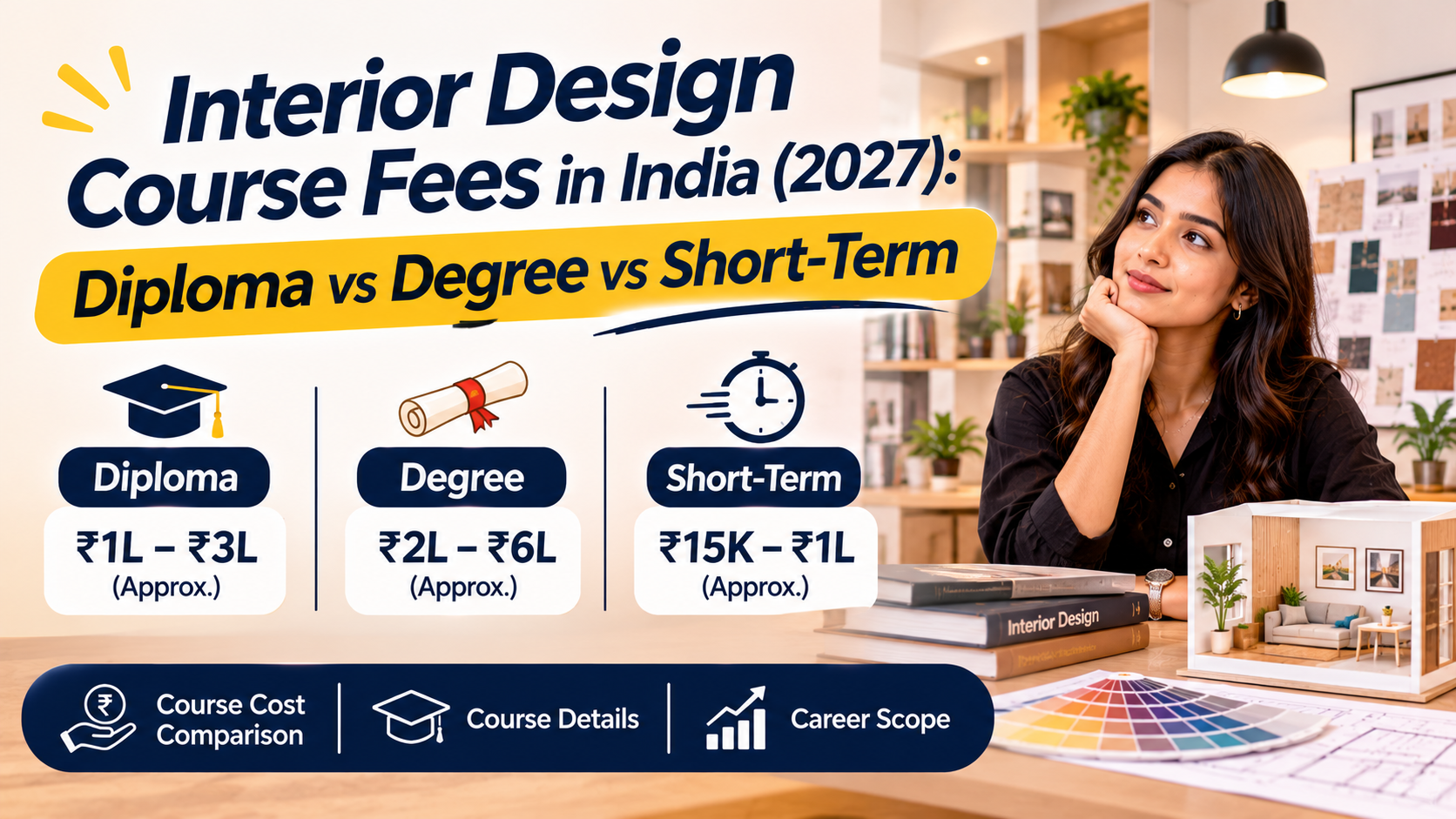
Interior Design Course Fees in India (2027): Diploma vs Degree vs Short-Term Quick answer: Interior design course fees in India range from …
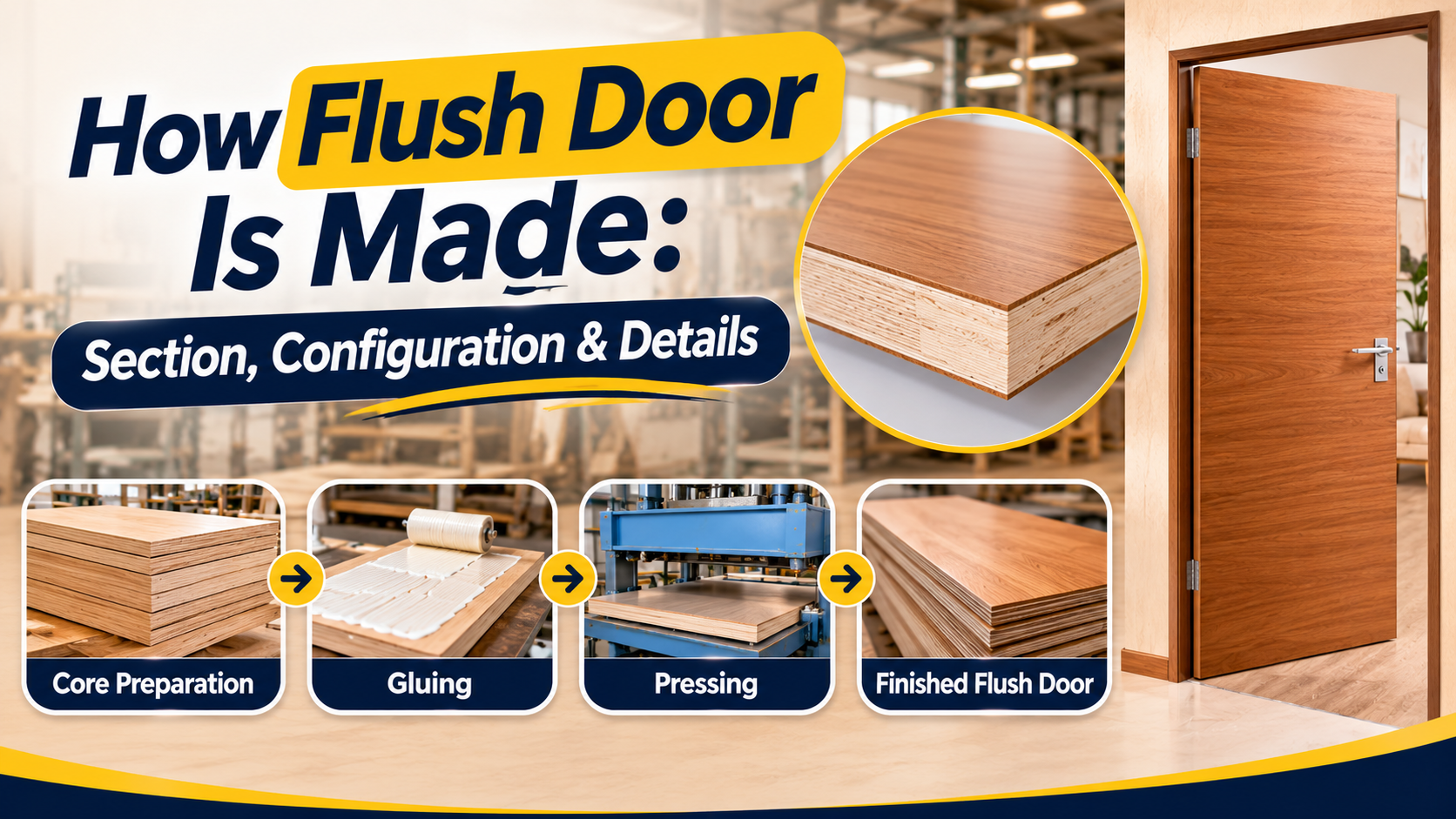
How Flush Door Is Made: Section, Configuration & Details Quick answer: A flush door is made by building a solid or hollow …
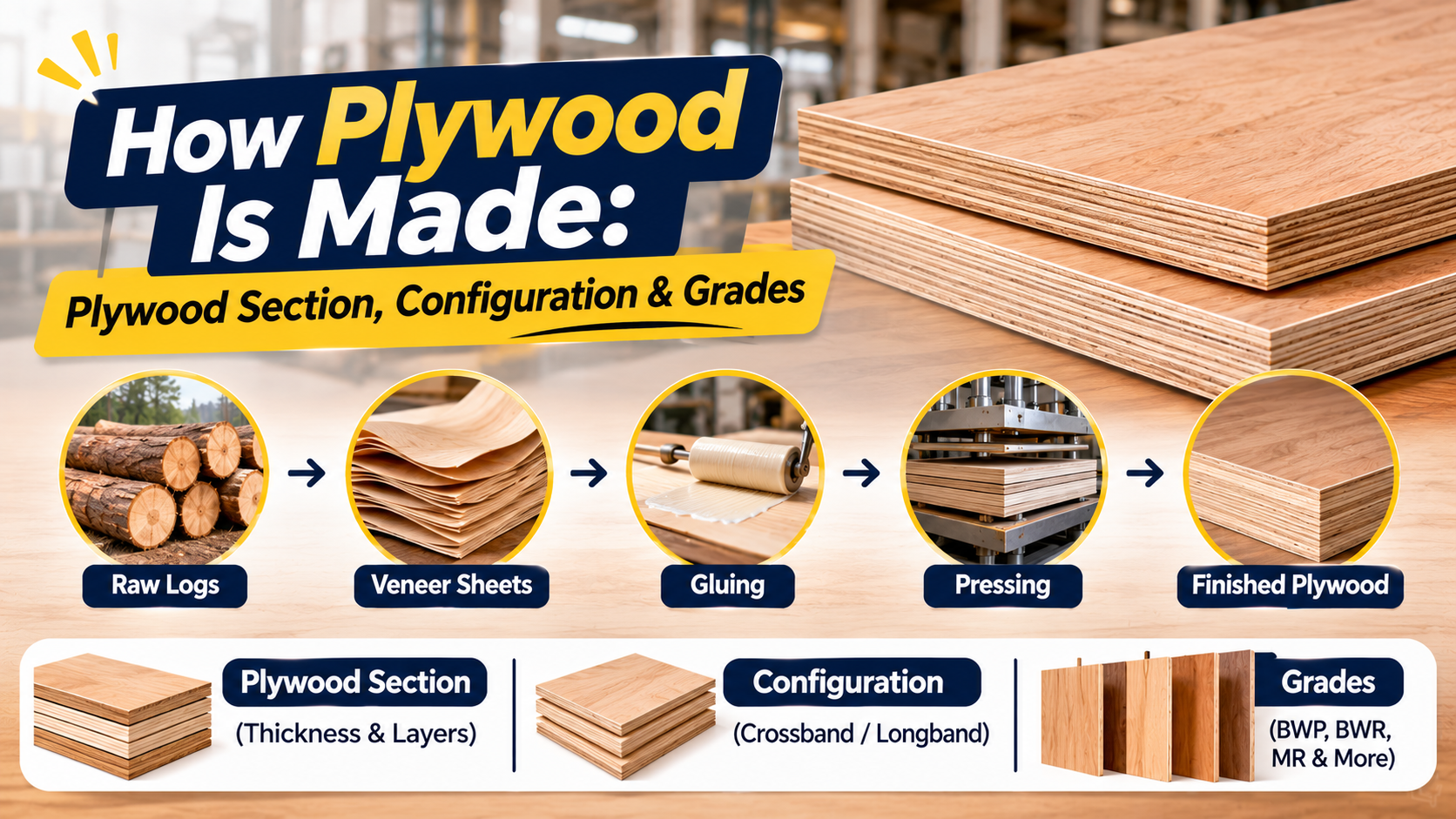
How Plywood Is Made: Plywood Section, Configuration & Grades Quick answer: How plywood is made involves peeling logs into thin veneer sheets, …