
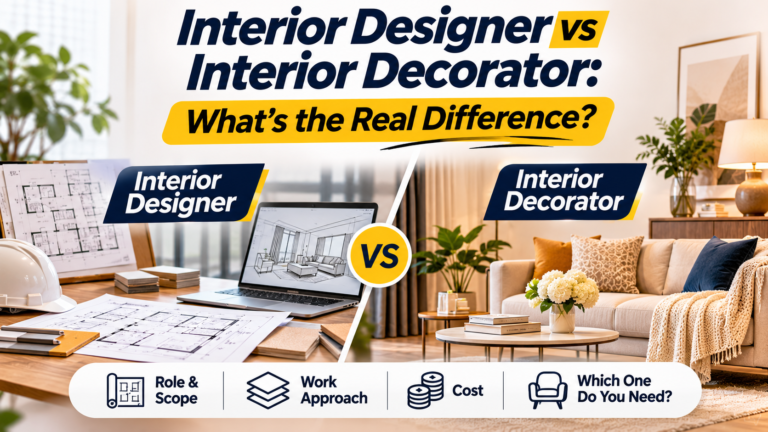
Interior Designer vs Interior Decorator: What's the Real Difference?
Quick answer: An interior designer plans the structural layout of a space, handles technical drawings, and manages construction-related changes like wall positions, lighting plans, and plumbing points. An interior decorator focuses on the aesthetic finish — furniture, colour schemes, fabrics, and accessories — within a space that’s already built. Choose a designer for renovation or new construction, and a decorator for styling an existing home.
Interior designer vs interior decorator is one of the first questions both students and homeowners ask, and the confusion is understandable. Both professions deal with how a space looks and feels, both use the word “interior,” and both show up on the same project at different stages. The difference, though, comes down to scope: one shapes the bones of a room, the other dresses it.
This guide breaks down what each role actually does, the education and skills each one requires, and how much each typically earns in India. If you’re a student deciding which path to study, or a homeowner trying to figure out who to hire for home interiors, you’ll find a clear answer by the end.
What is an interior designer and what does one do?
An interior designer is a trained professional who plans the layout, structure, and functionality of a space before it’s built or renovated. This includes space planning, electrical and plumbing coordination, lighting design, material specification, and liaison with architects and contractors on site.
An interior designer reads and prepares technical drawings — floor plans, elevations, and working drawings — using software like AutoCAD. A designer working on a Delhi NCR apartment, for example, will decide where a wall can be broken to create an open kitchen, where false ceiling points go for lighting, and how much clearance a passage needs in millimetres to meet building norms.
Interior designers typically work on both residential and commercial projects — homes, offices, retail stores, hospitality spaces — because their training covers structural and regulatory knowledge beyond colour and furniture choices. Students who want this depth of training usually opt for a two-year professional diploma in interior designing, which covers both design theory and technical execution.
What is an interior decorator and what does one do?
An interior decorator is a professional who enhances the visual appeal of a space using furniture, colour, fabric, lighting fixtures, and accessories. A decorator does not alter walls, electrical points, or the structural layout — the decorator works within a space exactly as it stands.
An interior decorator’s job typically starts after construction or renovation is complete. A decorator helps a homeowner in Noida Sector 18 choose a sofa fabric that complements the existing flooring, select curtain colours that balance natural light, and position accent pieces like lamps, mirrors, and artwork for visual harmony.
Because decoration doesn’t require technical drawing or site coordination, the training path is shorter and more focused on styling, colour theory, and material knowledge. Many students who want to enter this field quickly choose a one-month course of interior decoration to build these skills fast.
What is the difference in scope of work between an interior designer and interior decorator?
The core difference between interior design and interior decoration lies in whether the work touches the structure of a space. An interior designer can move a wall; an interior decorator works with the wall exactly where it already stands.
An interior designer’s scope typically includes:
- Plan the layout — decide room dimensions, traffic flow, and furniture zones at the blueprint stage.
- Coordinate structural changes — work with architects and contractors on walls, false ceilings, and electrical or plumbing points.
- Specify materials and finishes — choose flooring, tiles, paint types, and fixtures that suit the budget and site conditions.
- Oversee site execution — supervise vendors and contractors to ensure the design is implemented correctly.
An interior decorator’s scope typically includes:
- Assess the existing space — study the room as it stands, including its light, colour, and layout.
- Select furniture and furnishings — choose sofas, curtains, rugs, and cushions that match the client’s style.
- Build a colour and material palette — decide wall colours, textures, and finishes that work with existing architecture.
- Style the final look — arrange accessories, artwork, and decor pieces for a polished finish.
A homeowner renovating a 2 BHK flat and knocking down a kitchen wall needs an interior designer first. A homeowner who simply wants to refresh an already-built living room needs only a decorator.
What education and course duration does each role require?
Interior design education generally takes longer than interior decoration training because it covers technical and structural subjects. A full-time interior design diploma in India typically runs for one to two years, while an interior decoration certificate course can be completed in as little as one month to six months.
Interior design courses usually cover subjects like building construction, space planning, services (electrical and plumbing), materials, and professional practice, alongside design theory. Students entering after Class 12 commonly start with an interior design course after 12th, which builds this foundation from the ground up.
Interior decoration courses focus more narrowly on colour theory, furnishing styles, fabric knowledge, and basic space arrangement. A student who wants to start working quickly — perhaps styling homes for family and local clients — often finds the shorter decoration course a faster route to a first paying project.
What software and technical skills does each role need?
An interior designer needs technical drafting skills, since the job involves producing working drawings that contractors use on site. AutoCAD is the industry standard for floor plans and elevations, while SketchUp and 3ds Max are used for 3D visualisation and client presentations.
An interior decorator relies far less on technical software and far more on styling judgment, colour coordination, and material sourcing knowledge. A decorator may still use visualisation tools like SketchUp or mood-board apps to show a client how a room will look, but there’s no requirement to produce construction-grade drawings.
This difference in technical demand is one reason interior design training takes longer: mastering AutoCAD, understanding building codes, and coordinating site execution require more structured, sequential learning than styling and colour theory do.
What are the typical fees and earning potential for each?
Interior designers generally earn more than interior decorators because their scope of work is broader and carries more technical responsibility. In India, a fresher interior designer typically earns between ₹2.5 LPA and ₹4 LPA, while senior designers running independent practices can cross ₹15–25 LPA or more.
Freelance interior designers commonly charge per square foot (roughly ₹50 to ₹250 per sq ft) or a percentage of the total project value, typically 8–15%. This pricing reflects the amount of coordination, drawing work, and site supervision involved.
Interior decorators typically charge either a flat styling fee per room or a percentage markup on furnishings and decor items sourced for the client. Because the decorator’s scope is narrower, fees are generally lower than a designer’s project-based charges, though an experienced decorator with a strong client base and premium sourcing network can still build a steady, profitable practice.
When should a homeowner hire an interior designer vs an interior decorator?
Hire an interior designer if your project involves structural changes, new construction, or technical coordination like electrical and plumbing rework. A homeowner building a new house, converting a balcony into a room, or redesigning a kitchen layout needs a designer’s technical expertise from day one.
Hire an interior decorator if your space is already built and you simply want to refresh its look. A homeowner who wants new curtains, a different colour scheme, better furniture arrangement, or updated accessories — without touching walls or wiring — gets faster, more cost-effective results from a decorator.
Some projects need both: a designer to handle the layout and structural work, followed by a decorator to style the finished space. Ask your service provider directly which scope they cover before signing a contract, since the terms “designer” and “decorator” are sometimes used loosely in the Indian market.
Which career suits which type of student?
Choose interior design if you enjoy technical problem-solving, drafting, and understanding how buildings are constructed. Students who like working with measurements, site logistics, and software like AutoCAD tend to find design work more engaging and more financially rewarding over a career.
Choose interior decoration if your strength lies in colour sense, styling instinct, and working directly with clients on aesthetics rather than technical drawings. This path suits students who want a shorter course and faster entry into paid work, including those styling homes part-time alongside other commitments.
Both paths can lead to a full-time, well-paying career in India’s growing interior industry, and nothing stops a decorator from later upgrading into a full design qualification. Many students actually start with decoration to test the field before committing to the longer design diploma.
Interior Designer vs Interior Decorator: Side-by-Side Comparison
| Factor | Interior Designer | Interior Decorator |
|---|---|---|
| Scope of work | Structural layout, space planning, site coordination | Furniture, colour, fabric, styling |
| Can alter walls/electrical points | Yes | No |
| Typical education duration | 1–2 years | 1–6 months |
| Key software | AutoCAD, SketchUp, 3ds Max | Mood-board/visualisation tools (optional) |
| Typical projects | New construction, renovation, commercial fit-outs | Home styling, furnishing refreshes |
| Typical fees | ₹50–250/sq ft or 8–15% of project value | Flat styling fee or markup on furnishings |
| Career growth | ₹2.5–4 LPA (fresher) to ₹15–25+ LPA (senior) | Lower starting range, scalable with client base |
Key Takeaways
- An interior designer plans structure and layout; an interior decorator styles a space that’s already built.
- Interior design courses typically run 1–2 years, while decoration courses can be completed in weeks to a few months.
- Designers need technical software skills like AutoCAD; decorators rely more on colour theory and styling judgment.
- Designers generally earn more due to the technical and structural scope of their work.
- Homeowners with construction or renovation needs should hire a designer first; those refreshing an existing space can go straight to a decorator.
Frequently Asked Questions
What is the main difference between interior design and interior decoration?
Can an interior decorator become an interior designer later?
Yes, many students start with a shorter interior decoration course and later pursue a full interior design diploma. This path lets them test the field, build client experience, and then add technical design skills when ready.
Which course is better for a student who wants to start working quickly?
An interior decorator course is better for quick entry, since it can take as little as one month to a few months to complete. Interior design courses take longer because they cover technical drafting and construction knowledge.
Do I need to hire both an interior designer and a decorator for my home?
You need both only if your project involves structural changes followed by styling, such as a full home renovation. If your space is already built and you only want a styling refresh, a decorator alone is sufficient.
Who earns more: an interior designer or an interior decorator?
Interior designers generally earn more because their scope includes technical and structural responsibilities that carry higher project value. Decorators can still build a profitable practice, especially with a strong client network and premium sourcing relationships.
Is AutoCAD necessary for an interior decoration career?
AutoCAD is not strictly necessary for interior decoration, since the role doesn’t require construction-grade technical drawings. However, basic visualisation tools can still help a decorator present ideas more clearly to clients.
How do I know if my project needs a designer or a decorator?
Choose the Right Path for Your Interior Career or Home Project
Interior designer vs interior decorator isn’t a question of which career or service is “better” — it’s a question of scope. A designer shapes the structure of a space; a decorator brings that finished structure to life with colour, furniture, and styling.
If you’re a student weighing these two paths, think about whether you’re drawn to technical drafting and site coordination, or to colour sense and client-facing styling work. If you’re a homeowner, match your project’s needs — structural or purely cosmetic — to the right professional before you hire.
Sukriti Professional Academy offers free career counselling to help you choose between a full interior design diploma and a shorter decoration course, based on your goals and timeline. Reach out to our Kalkaji, Noida Sector 18, or Greater Noida campus to get started.
How Block Board Is Made: From Core Strips to Commercial Panels Quick answer: Block board is manufactured by sandwiching strips of softwood …
Interior Designer vs Interior Decorator: What’s the Real Difference? Quick answer: An interior designer plans the structural layout of a space, handles …

Interior Designer Salary in India: Freshers to Experienced Quick answer: Interior designer salary in India ranges from ₹2.5–4 LPA for freshers to …
Gypsum vs POP False Ceiling: Cost, Durability, Key Differences Quick answer: Gypsum board ceilings use factory-made panels fixed to a metal frame, …







One Response