
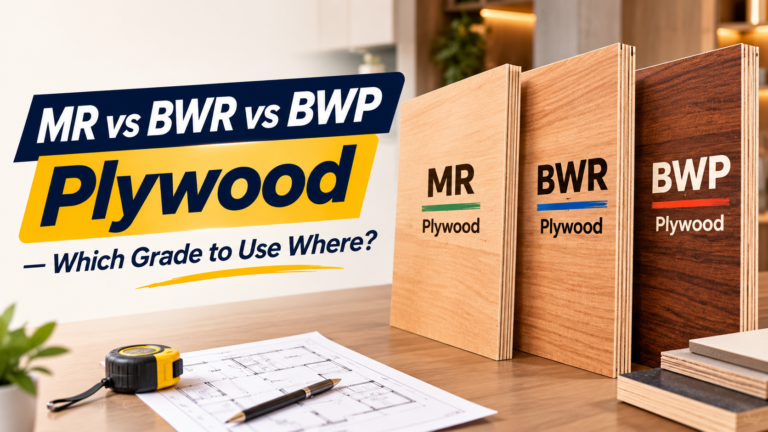
MR vs BWR vs BWP Plywood — Which Grade to Use Where?
Quick answer: MR (Moisture Resistant) plywood suits dry areas like bedroom wardrobes and living room units. BWR (Boil Water Resistant) plywood handles kitchen base cabinets and high-humidity zones where occasional water contact occurs. BWP (Boil Waterproof) plywood is built for bathroom vanities, under-sink cabinets, and outdoor-facing units where sustained water exposure is a real risk. Choosing between MR vs BWR vs BWP plywood comes down to one question: how much water will this surface actually face?
Every carpenter in Delhi NCR has a story about a client who chose the cheapest plywood for a kitchen and regretted it within two monsoons. Swollen shutters, delaminated layers, and a musty smell are the usual signs. The fix isn’t complicated — it’s about matching the plywood grade to the moisture conditions of each room, and that’s exactly what this guide breaks down.
At Sukriti Professional Academy, this is one of the first material-selection lessons taught to interior design students. Understanding plywood grades isn’t just useful for passing an exam — it’s a skill that protects your client’s investment and your own reputation as a designer. Let’s go through what MR, BWR, and BWP actually mean, where each one belongs in a home, and how to avoid the pricing traps that catch most first-time buyers.
What does MR, BWR, and BWP plywood mean?
MR plywood stands for Moisture Resistant plywood, bonded using urea-formaldehyde (UF) resin that tolerates occasional dampness but not standing water. MR plywood is the most commonly used grade in Indian interiors because most indoor furniture never touches water directly.
BWR plywood stands for Boil Water Resistant plywood, bonded with phenol-formaldehyde (PF) resin that can survive brief exposure to boiling water during manufacturing tests. BWR plywood handles humidity and occasional splashes far better than MR, which is why it’s the standard choice for kitchen cabinets across most Indian cities.
BWP plywood stands for Boil Waterproof plywood, built with the highest grade of phenolic resin and tested to withstand prolonged boiling without delaminating. BWP plywood is the closest commercial equivalent to true marine plywood, though marine plywood vs BWP plywood differ slightly in core density and the specific IS code they’re tested against.
What are the IS codes for plywood grades in India? (IS 303 vs IS 710)
IS 303 is the Indian Standard that governs plywood intended for general-purpose use, including MR grade plywood used in dry, interior applications. Plywood tested under IS 303 is checked for strength and basic moisture tolerance, not for sustained water resistance.
IS 710 is the Indian Standard that governs plywood intended for marine and exterior use, which includes BWP grade plywood. Plywood tested under IS 710 undergoes stricter boiling-water and fungal-resistance tests, which is why BWP sheets cost more and last longer in wet conditions.
BWR plywood sits between these two standards in practice, often manufactured to exceed IS 303 requirements while falling short of full IS 710 marine certification. When you’re comparing IS 303 vs IS 710 on a product label, remember that the code tells you what the plywood was tested for — not just what it’s made of.
Where should you use MR, BWR, and BWP plywood in a home?
Room-specific moisture levels should decide your plywood grade, not habit or budget alone. A bedroom wardrobe, for instance, rarely faces direct water contact, so MR plywood works perfectly well there and keeps costs down.
Kitchen base units and wall cabinets sit in a different moisture zone entirely, with steam, spills, and occasional leaks from under-sink pipes being common. This is exactly why BWR plywood is best for kitchen applications in most Indian homes — it offers a practical balance between water resistance and cost. For a deeper look at planning kitchen layouts around these material choices, Sukriti’s kitchen interior design planning guide for beginners covers the full process.
Bathroom vanities and under-sink cabinets face the harshest conditions in any home, with standing water, high humidity, and frequent temperature changes all present at once. BWP plywood for bathroom vanity units is the safer long-term choice here, since a cheaper grade will almost certainly swell or delaminate within a year or two.
Comparison Table: MR vs BWR vs BWP Plywood
| Grade | Full Form | Water Resistance | IS Code | Best Uses | Approximate Price Range (per sq ft) |
|---|---|---|---|---|---|
| MR | Moisture Resistant | Tolerates occasional dampness, not standing water | IS 303 | Wardrobes, bedroom units, living room furniture | ₹65–₹90 |
| BWR | Boil Water Resistant | Withstands humidity and occasional splashes | IS 303 (enhanced) | Kitchen cabinets, utility areas, semi-wet zones | ₹90–₹120 |
| BWP | Boil Waterproof | Withstands prolonged water exposure | IS 710 | Bathroom vanities, under-sink units, exterior-facing furniture | ₹130–₹180 |
Room-to-Grade Mapping Table
| Room/Area | Recommended Grade | Why |
|---|---|---|
| Bedroom wardrobe | MR | Low moisture exposure, cost-effective for dry storage |
| Living room TV unit | MR | No direct water contact expected |
| Kitchen base cabinets | BWR | Regular exposure to steam, spills, and cleaning water |
| Kitchen wall units | BWR | Humidity from cooking, occasional splashes |
| Bathroom vanity | BWP | Standing water and high humidity are constant |
| Under-sink cabinets (kitchen or bathroom) | BWP | Direct leak risk from plumbing fittings |
| Balcony or semi-outdoor furniture | BWP | Weather exposure demands marine-grade resistance |
What is the price of each plywood grade per sq ft in India?
Plywood price per sq ft in India varies by city, brand, and core quality, but general ranges hold fairly steady across Delhi NCR markets. MR plywood typically costs ₹65–₹90 per sq ft, making it the most budget-friendly option for dry interior work.
BWR plywood usually falls between ₹90–₹120 per sq ft, reflecting the stronger phenolic bonding used in manufacturing. BWP plywood commands the highest price, typically ₹130–₹180 per sq ft, due to the marine-grade resin and stricter IS 710 testing it undergoes.
These figures shift with GST, transportation costs, and core wood quality, so always get a current quote from your local supplier before finalising a budget. Treat published price lists as a starting point for negotiation, not a final figure.
How do you identify genuine plywood at a shop?
Checking the ISI mark should be your first step before buying any plywood sheet, since it confirms the product has been tested against the relevant IS code. A genuine ISI mark will include the IS number (303 or 710), the manufacturer’s license number, and the grade stamp printed clearly on the sheet.
Examining the core layers along the edge tells you a lot about quality that the surface alone won’t reveal. Gaps, overlaps, or visibly different wood species stacked unevenly are signs of a weaker core, regardless of what the outer label claims.
Asking for a sample cut and soaking a small piece in water overnight is a simple, low-cost way to test water resistance before committing to a bulk order. Genuine BWR and BWP plywood will show minimal swelling or layer separation after this test, while MR plywood may show some softening — which is expected and not a defect for dry-area use.
What are the common mistakes homeowners make with plywood selection?
Choosing MR plywood for kitchen cabinets to save money is the single most frequent mistake homeowners make in Delhi NCR. It often leads to swollen shutters and jammed hinges within two or three monsoon seasons, costing far more to replace than the initial savings.
Assuming BWP and marine plywood are identical is another common error, since marine plywood vs BWP plywood differ in core density and intended application — marine plywood is built for boat-building and extreme exposure, while BWP suits heavy-duty residential wet areas. Using one in place of the other without checking specifications can lead to over-spending or under-protecting a space.
Skipping the ISI mark check because a dealer offers a lower price is a risk that rarely pays off. Unbranded or mislabelled plywood sold at a discount often fails to meet the IS code printed on its label, leaving homeowners with weaker material than they paid for.
Expert Tip from Sukriti Faculty: During site visits across Delhi NCR, faculty at Sukriti Professional Academy consistently find that clients focus on plywood thickness while ignoring the grade entirely. A thick sheet of MR plywood will still swell in a wet kitchen, while a thinner BWR sheet will outperform it — always check the grade stamp before the thickness, not after.
Key Takeaways
- MR plywood suits dry, low-moisture areas like bedroom wardrobes and living room units.
- BWR plywood is the practical standard for kitchen cabinets, balancing cost and water resistance.
- BWP plywood, tested under IS 710, is necessary for bathroom vanities and under-sink cabinets facing sustained water exposure.
- IS 303 governs general-purpose plywood, while IS 710 governs marine-grade and BWP plywood — checking the code on the label tells you what the sheet was actually tested for.
- Always verify the ISI mark, grade stamp, and core quality in person before purchasing, since labels alone don’t guarantee genuine material.
Frequently Asked Questions
What is the main difference between MR, BWR, and BWP plywood?
The main difference lies in water resistance and resin type. MR plywood uses UF resin for dry areas, BWR plywood uses PF resin for humid or occasionally wet zones, and BWP plywood uses the strongest phenolic resin, tested under IS 710, for sustained water exposure.
Which plywood is best for kitchen cabinets in India?
BWR plywood is generally best for kitchen cabinets in India, since it withstands steam, spills, and daily cleaning better than MR plywood without the higher cost of BWP. Under-sink units are the exception, where BWP is recommended due to direct leak risk.
Is BWP plywood the same as marine plywood?
No, BWP plywood and marine plywood are related but not identical. Marine plywood vs BWP plywood differ in core density and intended use — marine plywood is built for boats and extreme water exposure, while BWP plywood is designed for heavy-duty residential wet areas like bathrooms.
How much does plywood cost per sq ft in India?
Plywood price per sq ft in India ranges roughly from ₹65–₹90 for MR, ₹90–₹120 for BWR, and ₹130–₹180 for BWP, depending on brand, city, and core quality. Always confirm current rates with a local supplier before budgeting.
How can I tell if plywood is genuine before buying it?
Check the ISI mark, the grade stamp, and the IS code (303 or 710) printed on the sheet before purchasing. Examining the core edge for even layering and requesting a sample soak test are additional ways to confirm quality on the spot.
Can I use MR plywood in a bathroom to save money?
No, MR plywood is not recommended for bathrooms, since it cannot withstand sustained water exposure and will likely swell or delaminate within a short period. BWP plywood is the safer choice for bathroom vanities and under-sink cabinets.
Why do interior design students need to understand plywood grades?
Interior design students need to understand plywood grades because material selection directly affects a project’s durability and client satisfaction. Knowing the difference between MR vs BWR vs BWP plywood helps junior designers avoid costly on-site corrections and build long-term credibility with clients.
Choosing Between MR vs BWR vs BWP Plywood the Right Way
Deciding between MR vs BWR vs BWP plywood always comes back to one factor: how much water exposure a space will realistically face over its lifetime. MR plywood works for dry storage, BWR plywood earns its place in kitchens, and BWP plywood is worth the extra cost wherever water contact is frequent or unavoidable.
Getting this choice right the first time saves clients from expensive rework and protects a designer’s reputation on every project. If you’d like to learn how plywood grades fit into broader material decisions — including laminates — Sukriti’s HPL vs LPL guide is a useful next read.
Sukriti Professional Academy, led by Dr. Ar. Babita Srivastava with over 25 years of experience in interior design education, offers free career counselling for students exploring interior design across its Kalkaji, Noida Sector 18, and Greater Noida branches. Reach out for a free counselling session to find out which course fits your goals.
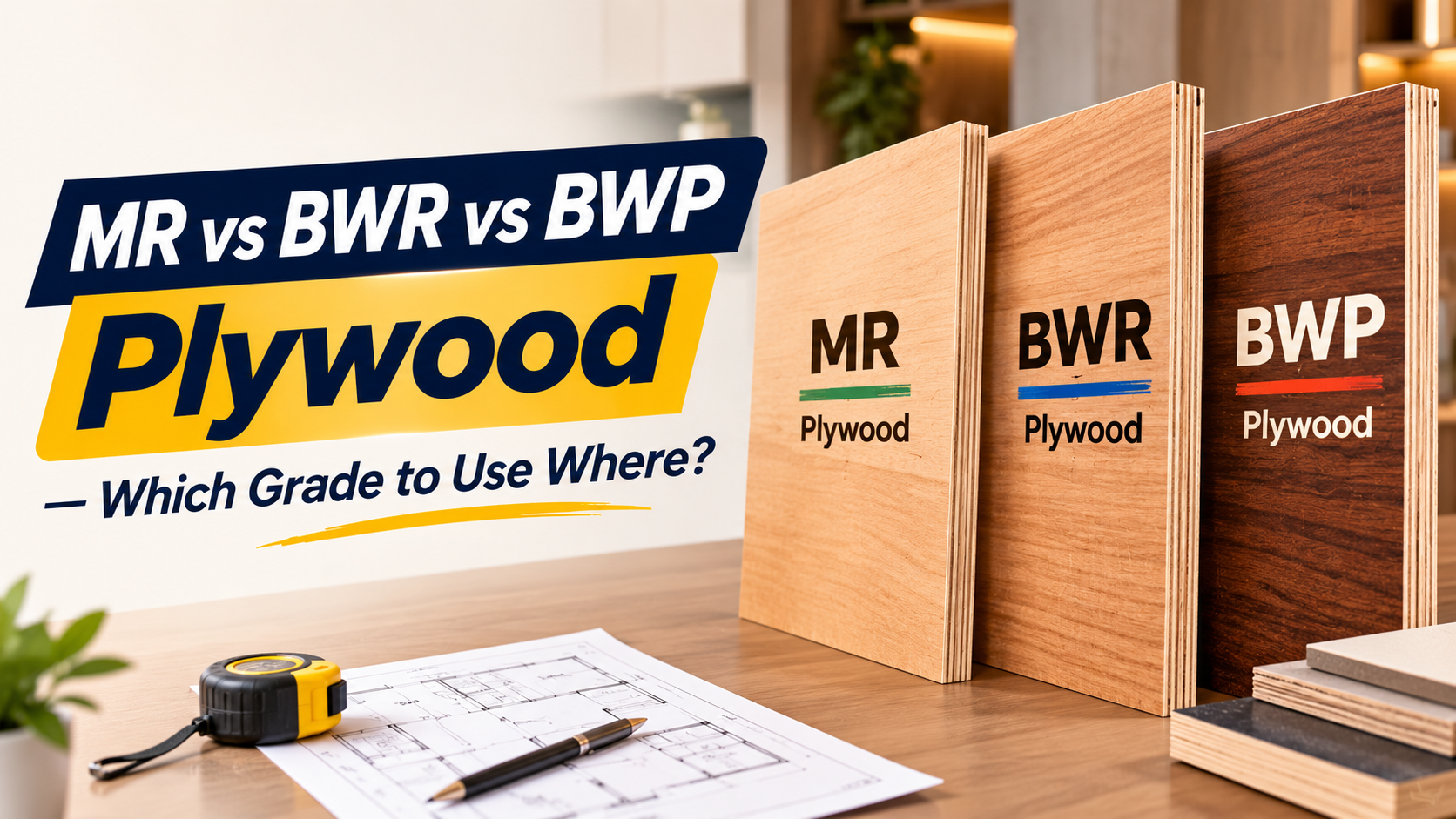
MR vs BWR vs BWP Plywood — Which Grade to Use Where? Quick answer: MR (Moisture Resistant) plywood suits dry areas like …
Standard Furniture Dimensions in India: Bed, Sofa, Wardrobe & More Quick answer : Interior Design is an ever exchanging and ever-evolving field. …

Interior Design Course in Noida and Greater Noida Sukriti Professional Academy is a leading interior design institute in Noida and Greater Noida, …

Interior Design Course in Aligarh Students in Aligarh looking for a professional interior design course can enroll at Sukriti Professional Academy, based …