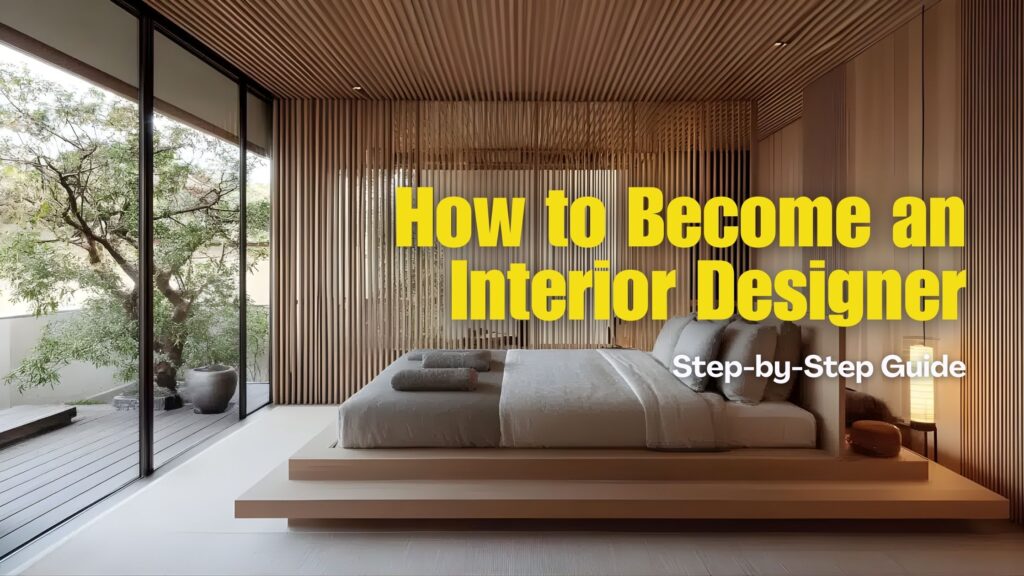
How to Become an Interior Designer: Step-by-Step Guide
Many people think interior design is just about choosing nice curtains and arranging furniture. If you’ve ever watched a home makeover show, it might seem like a glamorous world of picking colors and shopping for decor. While that’s part of the fun, the reality of the profession is much deeper, more technical, and incredibly rewarding.
This career is about understanding people and how they live, work, and interact within a space. It blends art with science, creativity with technical precision. It’s about solving problems and improving lives by transforming empty rooms into functional, safe, and beautiful environments. If you’ve ever found yourself rearranging your room to make it feel better or sketching floor plans for fun, you might have the spark of a designer. This guide will walk you through what it truly takes to turn that spark into a professional career.
Who Is an Interior Designer?
Before diving into the “how,” it’s crucial to understand the “what.” An interior designer is a trained professional who plans and designs interior spaces in buildings. Their work goes far beyond aesthetics.
A designer’s daily responsibilities can include:
- Meeting with clients to understand their needs, budget, and lifestyle.
- Creating detailed drawings, including floor plans, elevations, and electrical layouts.
- Developing concepts and mood boards to communicate a design vision.
- Selecting materials, finishes, furniture, lighting, and textiles.
- Coordinating with architects, contractors, electricians, and plumbers.
- Managing project timelines and budgets.
- Ensuring that all designs comply with building codes and safety regulations.
- It’s also important to know the difference between an interior designer and an interior decorator. A decorator primarily focuses on the surface-level appearance of a space—paint colors, furniture, accessories, and fabrics. A designer, on the other hand, is involved in the structural planning of the space itself, often working with blueprints and making architectural modifications to improve flow and function.
Skills Required to Become an Interior Designer
A successful interior designer career path is built on a diverse set of abilities. It’s not just about having “good taste.” You need a balanced mix of creative, technical, and interpersonal skills.
Creative Skills
This is the foundation. You need a strong sense of spatial awareness, an eye for color and texture, and the ability to visualize a finished space from an empty room. Creativity here means problem-solving—figuring out how to make a small apartment feel spacious or how to design a functional office for a team of 20.
Technical and Software
Skills Ideas are useless if you can’t communicate them clearly. This is where technical interior designer skills come in. You must be proficient in software like AutoCAD for 2D drafting, and tools like SketchUp, 3ds Max, or V-Ray for 3D modeling and rendering. These skills are non-negotiable in today’s industry.Communication and Client-Handling Skills
You could be the most talented designer in the world, but if you can’t understand your client’s vision or manage their expectations, projects will fail. Strong communication, active listening, and the ability to present your ideas confidently are essential for building trust and ensuring a smooth process.Educational Path to Become an Interior Designer
While raw talent is important, formal education provides the structure, technical knowledge, and credibility needed for a professional career. Here’s a look at the typical educational journey.
As for interior designer qualifications, there are several routes you can take. You can pursue an interior designing course after 12th or even start with foundational courses after the 10th grade.
Diploma vs. Degree vs. Certificate:
- Degree Courses (B.Des. or B.Sc. in Interior Design): These are typically 3-4 year programs that offer an in-depth, comprehensive education covering design theory, history, technical drawing, and business practices. A degree is often preferred for corporate roles.
- Diploma Courses: These are shorter, 1-2 year programs that are more focused on practical, job-oriented skills. They are an excellent option for those who want to enter the workforce quickly.
- Certificate Courses: These are short-term programs (3-6 months) that usually focus on a specific skill, like a particular software or design specialization. They are great for skill enhancement.
Regardless of the path you choose, the importance of practical training cannot be overstated. A good course will include extensive lab sessions, workshops, and real-world projects.
Step-by-Step Guide: How to Become an Interior Designer
Ready to start your journey? Here is a practical, step-by-step plan to follow.
Step 1: Understand the Profession Do your homework. Talk to current interior designers. Read industry magazines and blogs. Understand the day-to-day realities of the job—the long hours on-site, the challenges of managing contractors, and the pressure of deadlines. Make sure this is a career you are passionate about.
Step 2: Choose the Right Course Based on your goals and timeline, select the educational program that fits you best. Look for an institute with experienced faculty, a strong emphasis on practical work, and good industry connections. Don’t just look at the fees; look at the curriculum and the student work.
Step 3: Learn Software and Technical Drawing Devote yourself to mastering the tools of the trade. Get comfortable with AutoCAD for creating precise technical plans. Dive into 3D modeling software to bring your ideas to life. This technical proficiency is what will make you employable.
Step 4: Build a Portfolio Your portfolio is your most important career asset. It’s a visual resume that showcases your skills and design style. Throughout your course, meticulously document every project—from initial sketches and mood boards to final renders and technical drawings. Even conceptual or student projects belong here.
Step 5: Gain Practical Experience or an Internship Theory is one thing; practice is another. An internship is invaluable. It gives you a behind-the-scenes look at how a design studio operates. You’ll learn about client interactions, material sourcing, and site supervision. This hands-on experience is often what lands you your first job.
Step 6: Start Working or Freelancing With your education, portfolio, and some experience, you are ready to enter the job market. You can join an architectural firm, an interior design studio, or a real estate company. Alternatively, you can start taking on small freelance projects to build your own brand and client base.
Interior Designer Salary in India
Income is an important consideration for any career. The interior designer salary in India can vary widely based on skill, experience, location, and the type of employment.
- Fresher Salary: A recent graduate working in a metro city like Delhi, Mumbai, or Bangalore can expect to earn anywhere from ₹2.5 lakh to ₹4.5 lakh per year.
- Experienced Designer Income: With 5-7 years of experience and a strong portfolio, a designer’s salary can increase significantly, ranging from ₹8 lakh to ₹15 lakh or more annually.
- Freelance and Studio Earnings: The income potential for freelancers and studio owners is limitless but depends entirely on their ability to secure projects. Successful freelance designers often charge a percentage of the total project cost (typically 10-15%) or a fixed fee.
Career Options After Interior Design
An interior design qualification opens up a variety of specialized career paths. You are not limited to just designing homes.
- Residential Interiors: Designing private homes, apartments, and villas.
- Commercial Interiors: Designing offices, retail stores, hotels, and restaurants.
- Kitchen & Bath Design: A specialized niche focusing on these highly technical spaces.
- Furniture Design: Creating custom furniture pieces for projects.
- Lighting Design: Focusing on the science and art of illumination.
- Set Design: Designing sets for films, television shows, and theatre.
- Freelancing and Studio Setup: Starting your own business.
Challenges in an Interior Design Career
To give you an honest picture, it’s important to acknowledge the challenges.
- Managing Client Expectations: Clients can sometimes have unrealistic ideas or budgets. A big part of your job is to guide them gently but firmly.
- Deadlines and Site Coordination: Projects rarely go exactly as planned. Delays in material delivery or issues with contractors can be stressful.
- Continuous Learning: Trends, materials, and technologies are always changing. You must be committed to lifelong learning to stay relevant.
Is Interior Design the Right Career for You?
So, how do you know if this is the right path? Ask yourself these questions:
- Are you a creative problem-solver?
- Do you have a good sense of spatial awareness?
- Are you patient and a good listener?
- Are you organized and detail-oriented?
- Are you comfortable with both creative brainstorming and technical work?
If you answered yes to most of these, you have the core personality traits of a successful designer. The long-term growth in this field is strong, especially as people invest more in creating well-designed living and working environments.
Your Next Step
Becoming an interior designer is a journey that requires passion, dedication, and the right training. It’s a demanding but deeply fulfilling profession where you get to leave a lasting impact on people’s lives by shaping the spaces they inhabit.
If this guide has solidified your interest, the next logical step is to find the right education. For those who want structured learning, practical exposure, and mentorship from industry professionals, exploring a dedicated interior design course from a reputed institute is the best way to build a strong foundation for a successful career.